
Idylls of the King is made up 12 separate but interrelated poems, all revolving around the subject of the Arthurian legend. The work was not written in chronological order, with "The Passing of Arthur," the last of the poems, being written first, shortly after the death of Arthur Henry Hallam and likely in tribute to that young man. The work begins and ends with poems about Arthur while other ten poems deal with his knights, his Queen, and Merlin. Together, the poems illustrate the greatest and purity of the King and the failure of the others to live up to his standards.
The work is written in blank verse and contain much imagery of the sea and other aspects of nature. Religion plays a major role with the many biblical allusions. Dedicated to Prince Albert, the work was first published in 1859 with four idylls, two years before the death of the man Tennyson calls "Albert the Good." Tennyson believed that Albert displayed many of the same qualities with which Arthur is depicted. Ultimately, Tennyson desired all Victorians to adhere to those same morals.
Sunday, April 11, 2010


Friday, April 9, 2010
Alfred, Lord Tennyson

Tennyson wrote Idylls of the King over a period of more than fifty years. "The Passing of Arthur" was written shortly after the death of Hallam, and he would continue to write and edit the poem until its final publication in 1885. A lifetime fascination with the Arthurian legend, particularly as presented by Sir Thomas Malory, fostered the work. The work is infused with Victorian morals, which was Tennyson's attempt to modernize the legend.
Wednesday, April 7, 2010
A Broken Vase
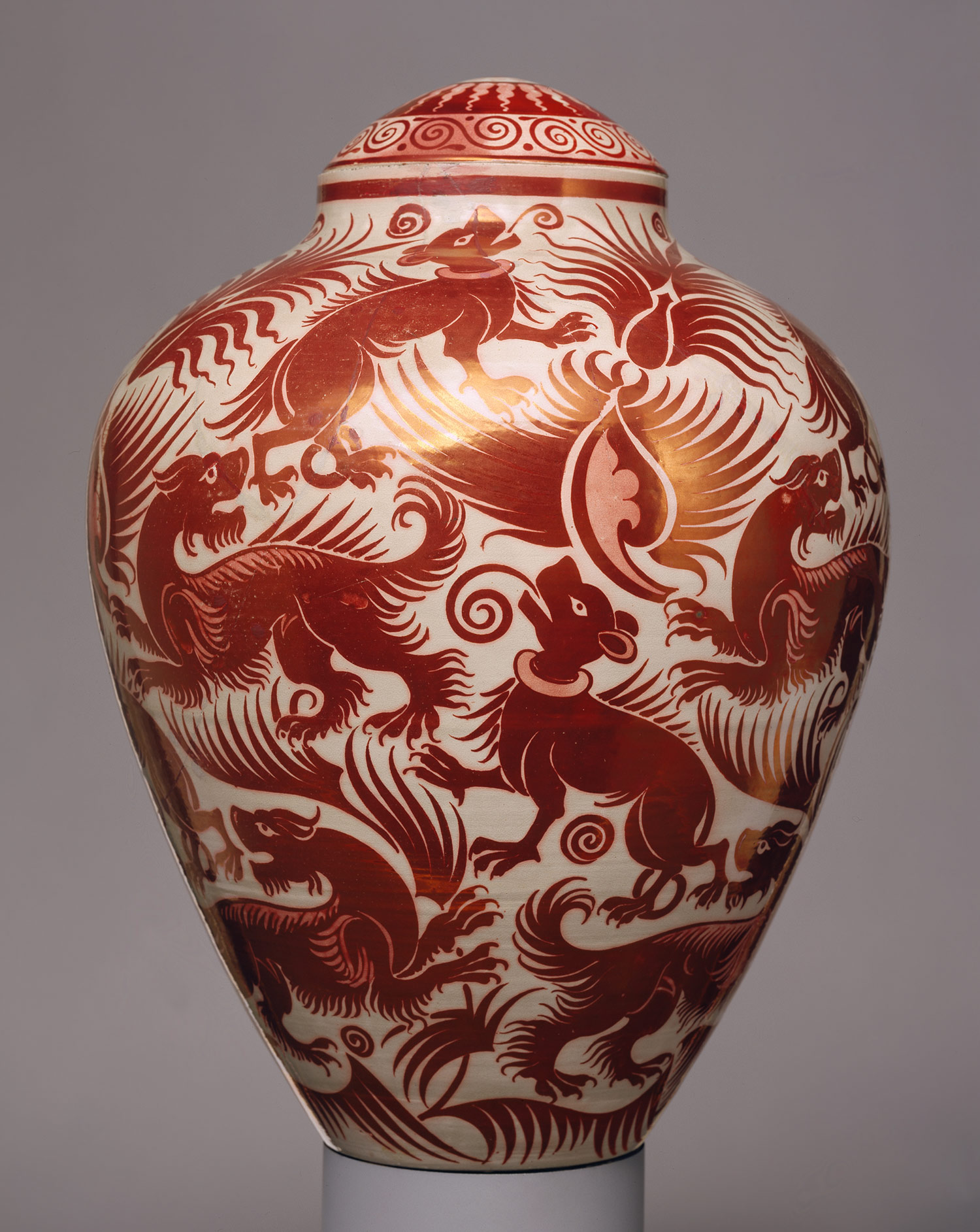
But one very curious fact was that all the shame and vexation and mortification which he felt over the accident were less powerful than the deep impression of the almost supernatural truth of his premonition. He stood still in alarm—in almost superstitious alarm, for a moment; then all mists seemed to clear away from his eyes; he was conscious of nothing but light and joy and ecstasy; his breath came and went; but the moment passed. Thank God it was not that! He drew a long breath and looked around.
Myshkin was more affected by the fact that he had a premonition that he would break the vase than he was by the actual breaking of the vase. Similarly, when Myshkin sees Natasya's body, he does not appear to be shocked at all and is more focused on consoling Rogozhin than showing concern for Natasya, despite how much he pitied her. Interestingly, before the incident with the vase, Aglaia jokingly encouraged him to break it, saying her mother loves it and would go out of her mind. When the actual event takes place, Aglaia shows more concern for Myshkin than the vase. By the end of the novel, Aglaia and Natasya are no longer friends but rivals and Aglaia likely did not show much emotion upon hearing of Natasya's death. In the end, Natasya is no more valuable than a broken vase.
Vase with Cover (above), William De Morgan.
Monday, April 5, 2010
Runaway Bride

The engagement between Myshkin and Aglaia is broken when the latter two visit Natasya, and Myshkin is unable to reject completely. Aglaia runs away and Myskin remains with Natasya, deciding to marry her instead. They decide on Pavlovsk as the site for the wedding, and, during the ceremony, Natasya spots Rogozhin and runs away with him. The two run run off to St. Petersberg, where Myshkin searches endlessly, albeit unsuccessfully.
Myshkin shows once again that he is unable to forsake Natasya. He remains committed to saving her, if at all possible. Aglaia feels rejected, but she does not, in Myshkin's eyes, need salvation. Interestingly, when Natasya see Rogozhin in the crowd, she uses the words, "save me," essentially asking him to save her from her salvation. Natasya realizes that she cannot "live among the trees" of Pavlovsk; a peaceful exiistence would be foreign to her. She is more comfortable in the chaotic city setting of St. Petersberg.
Friday, April 2, 2010
Roman Catholicism
The Epanchins decide to have a party in order to present Myshkin to their rich friends as the future husband of Aglaia. Myshkin desperately wants to make a good impression and is mostly quiet throughout most of the evening until he hears the name Pavlishtchev, his benefactor. One of the partygoers, I van Petrovich, knew Pavlishtchev and saw Myshkin when the latter was a child. Petrovich then mentions that Pavlishtchev converted to Roman Catholicism, a total shock to Myshkin. The Prince goes on to launch a verbal assault on Catholicism, calling it an "unchristian religion." This verbal onslaught excites Myshkin to the point that he gesstures violently and knocks over an expensive vase belonging to the Epanchins and has an epileptic attack.
Myshkin's attack on the Catholic Church is not spiritually based but politically based. He states that Roman Catholicism is nothing but the "continuation of the Western Roman Empire" and that the Pope has an earthly throne and carries a sword. He sees the Pope as someone having too much unquestioned temporal authority, sanctioning killing for the faith through the Jesuits. He further states that "socialism springs from Catholicism," suggesting that the Church removes individuality from its adherents. It denies everyone property, having bartered the truth for money. The possibility that his benefactor converted to Roman Catholicism proves too much for Myshkin, who has another epileptic fit.
Myshkin's attack on the Catholic Church is not spiritually based but politically based. He states that Roman Catholicism is nothing but the "continuation of the Western Roman Empire" and that the Pope has an earthly throne and carries a sword. He sees the Pope as someone having too much unquestioned temporal authority, sanctioning killing for the faith through the Jesuits. He further states that "socialism springs from Catholicism," suggesting that the Church removes individuality from its adherents. It denies everyone property, having bartered the truth for money. The possibility that his benefactor converted to Roman Catholicism proves too much for Myshkin, who has another epileptic fit.
Subscribe to:
Posts (Atom)
LinkWithin
